


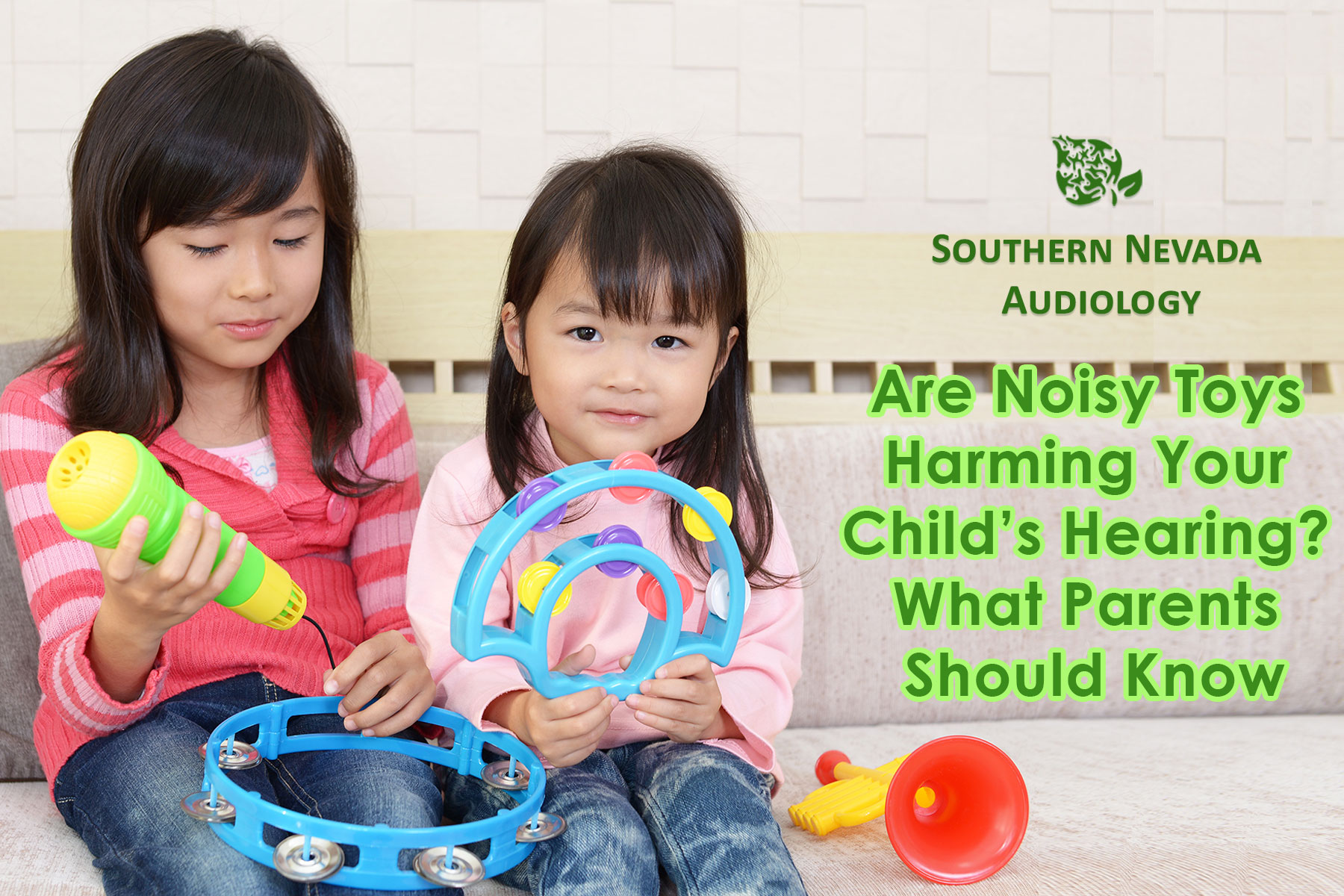
During the holidays and throughout the year, toys that light up, play music, and make exciting sounds are often at the top of children’s wish lists. While these toys can bring joy and entertainment, many parents are surprised to learn that some popular toys can produce sound levels loud enough to potentially harm a child’s hearing.
How Loud Is Too Loud?
Children’s ears are still developing, which makes them more vulnerable to noise-related hearing damage. As a general rule, sounds above 85 decibels (dB) can cause harm with repeated or prolonged exposure. To put that in perspective, normal conversation is around 60 dB, while a lawn mower is about 90 dB.
Some toys—especially those designed to be held close to the face, such as toy microphones, phones, musical instruments, and electronic games—can exceed safe listening levels. When used frequently or at close range, these sounds may increase the risk of noise-induced hearing loss over time.
Why Children Are at Greater Risk
Young children often hold toys closer to their ears and may play with them for extended periods. They also don’t always recognize when a sound is uncomfortably loud or know when to take breaks. Because hearing damage is cumulative and permanent, even small exposures can add up over the years.
Noise-related hearing loss doesn’t always happen suddenly. It can develop gradually, making it harder for parents to notice early signs until communication or learning challenges appear.
Signs a Toy May Be Too Loud
- Parents should be cautious if a toy:
- Sounds loud to an adult from an arm’s length away
- Causes your child to cover their ears
- Leaves ringing or discomfort after play
- Can’t have the volume adjusted or turned off
If a toy seems too loud for you, it’s likely too loud for your child.
How Parents Can Protect Their Child’s Hearing
- Fortunately, there are simple steps parents can take to reduce the risk:
- Choose toys with volume controls or adjustable sound settings
- Test toys before giving them to your child
- Use clear tape over the speaker to slightly reduce volume if needed
- Encourage breaks during noisy playtime
- Teach children to keep sound toys away from their ears
- Store loud toys out of reach and limit playtime with them
When possible, opt for toys that promote creativity and learning without excessive noise, such as puzzles, books, art supplies, or building sets.
When to Have Your Child’s Hearing Checked
If your child frequently asks for repetition, turns up the volume on devices, seems sensitive to sound, or has trouble following directions, a hearing evaluation may be helpful. Routine hearing screenings are an important part of overall wellness and can catch concerns early.
Protecting the Sounds That Matter
Noisy toys don’t have to be eliminated entirely, but awareness and moderation go a long way. By choosing toys wisely and setting healthy listening habits early, parents can help protect their child’s hearing—so they don’t miss out on the sounds that matter most, today and in the future.